When Should a Skincare Brand Rebrand?
Most skincare founders think about rebranding for at least a year before they actually do it. They notice things are off. They see new competitors entering the space looking sharper. They lose a retail conversation they thought they had. They sit with the discomfort, hope it passes, and eventually realize the brand they built two or three years ago is no longer the brand they need.
Rebranding is expensive, time-consuming, and emotionally hard. So the question is not whether you want to. The question is whether you actually need to, and whether the timing is right.
Here are the six signs that tell you it is time, and the questions worth asking before you commit.
How do I know if my skincare brand needs a rebrand?
A skincare brand needs a rebrand when the visual identity no longer matches the business reality. Specific signs include declining conversion rates, retail buyers passing on the brand, the founder feeling embarrassed by old assets, the brand looking dated next to competitors, an outgrown positioning, or a strategic pivot the current brand cannot support.
Rebranding is not a vibe shift. It is a business decision. The signs are concrete, measurable, and usually visible for months before the founder admits them out loud.
If one of the six signs below is true, the brand is showing wear. If two or more are true, it is time to seriously consider the work. If three or more are true, the rebrand should already be on the calendar.
Sign 1: Conversion rates are declining
If your skincare brand’s conversion rate has dropped over the past 6 to 12 months without a clear cause like ad spend changes or seasonality, the brand may be the issue. Customers who would have trusted you a year ago are hesitating now. The visual identity is no longer carrying the weight it used to.
Conversion is the cleanest signal. The brand is doing the same job it has always done, but the rate at which visitors become customers is dropping. That happens when the brand starts to feel dated next to newer competitors, when the visual identity stops matching the customer’s expectations, or when the messaging no longer speaks to who the customer actually is.
Before assuming the brand is the cause, rule out other variables. Has ad spend changed. Has the traffic source mix shifted. Has the product line changed. If those are stable and conversion is still falling, the brand is the lever.
Sign 2: Retail buyers are passing
If retail buyers are passing on your skincare brand, it usually means the packaging is not strong enough to compete on shelf. Retail rejection is the clearest external signal that a rebrand is needed. Buyers see thousands of brands a year and reject the ones that do not look ready for their stores.
Retail buyers do not have time to imagine what your brand could be. They look at the packaging on their desk, picture it on their shelf next to the brands already winning, and decide in seconds. If the answer is no, they pass.
If you have been in conversations with Sephora, Ulta, Credo, Whole Foods, or any major retailer and the conversation died at the packaging, that is the brand. Not the formula. Not the price. The brand.
This is one of the most common reasons skincare founders rebrand. Retail is the moment the brand has to be undeniably ready, and most brands built in the first two years are not.
Sign 3: The founder is embarrassed by old assets
If the founder hesitates before sharing the website, packaging, or pitch deck, the brand is no longer doing its job. The founder’s confidence in the brand is the first signal of how the market will receive it. When the founder loses confidence, customers will follow.
Founders feel this before anyone else. The website that used to feel exciting now feels embarrassing. The old packaging photos no longer get used in pitch decks. The Instagram grid is half-redesigned, half-original, and the gap is widening.
Rationalize it however you want, but the discomfort is real data. The founder spends more time with the brand than anyone else. If the founder no longer believes in it, the brand has stopped doing its job at the most important level.
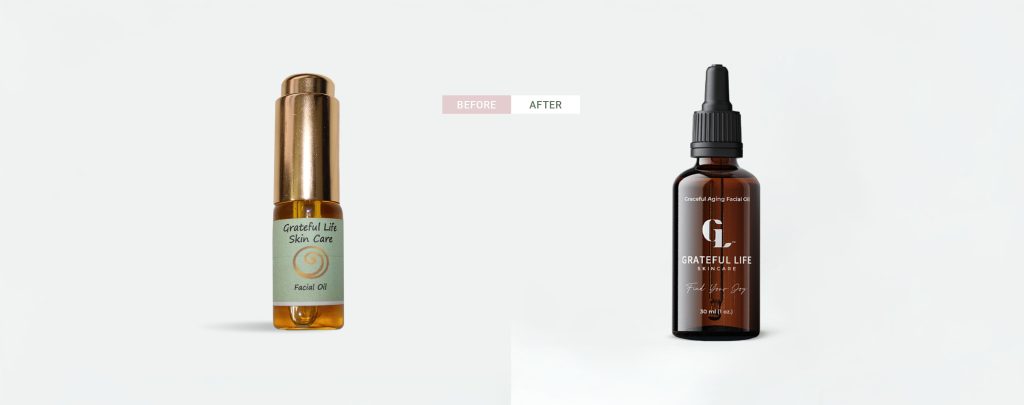
For example, we did exactly that with the Grateful Life Skincare rebrand, where the founder had outgrown the original brand and needed an identity that matched the level the business had reached.
Sign 4: The brand looks dated next to competitors
If your skincare brand looks five years older than the competitors entering your category, the brand is dated. Skincare design moves fast. Brands launched in 2020 already feel different from brands launched in 2024. If your brand is not keeping pace, customers will see it.
Open three competitor sites in tabs next to yours. Open three competitor product pages. Open three competitor Instagram grids. If your brand looks meaningfully older, less considered, or less premium across that comparison, the gap is real.
This is the hardest sign to accept because the brand might still feel right to the founder. The founder built it. The founder loves it. But the customer is not comparing your brand to itself. The customer is comparing your brand to the newest brands they have seen this week.
Sign 5: The brand has outgrown its original positioning
A skincare brand outgrows its original positioning when the customer base, product line, or business model has shifted but the brand has not. The brand was built for who you were two years ago. The brand needs to match who you are now.
Most skincare brands launch with a tight positioning. As the business grows, the customer base broadens, new SKUs launch, the product line expands beyond the original hero, the price point shifts, or the channels change. The brand built for the original positioning starts to feel mismatched.
This is a healthy problem. It means the business is growing. But the brand has to grow with it. A brand built for a $40 hero serum will not work when the line includes a $120 cream and a $25 cleanser. A brand built for direct-to-consumer will not work when wholesale becomes 60% of revenue. The brand needs to expand to match the business.
Sign 6: A strategic pivot is on the table
If a skincare brand is pivoting categories, repositioning, raising a round, or preparing for retail expansion, the brand should rebrand to support the new direction. Strategic pivots fail when the brand does not move with them. The new chapter needs a brand built for what comes next, not what came before.
Major business changes need brand changes. Moving from clean beauty to actives. Repositioning from mass to premium. Raising a round and needing to look bigger than you are. Expanding into retail. Adding a category like body care or haircare.
Each of these changes the customer’s expectations. The brand that worked for the old direction will not carry the new one. The smartest founders rebrand at the start of the pivot, not after the pivot has already underperformed.
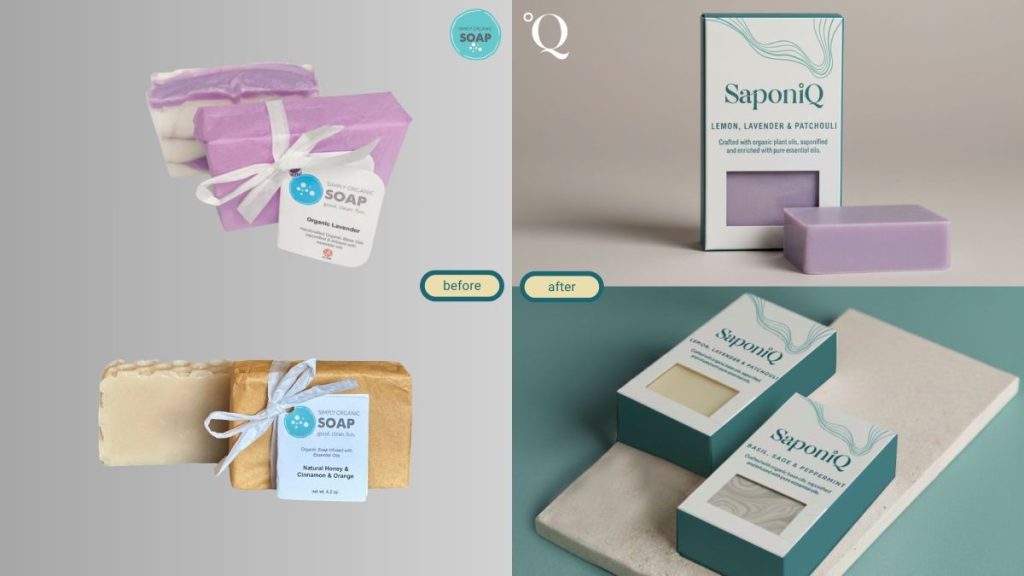
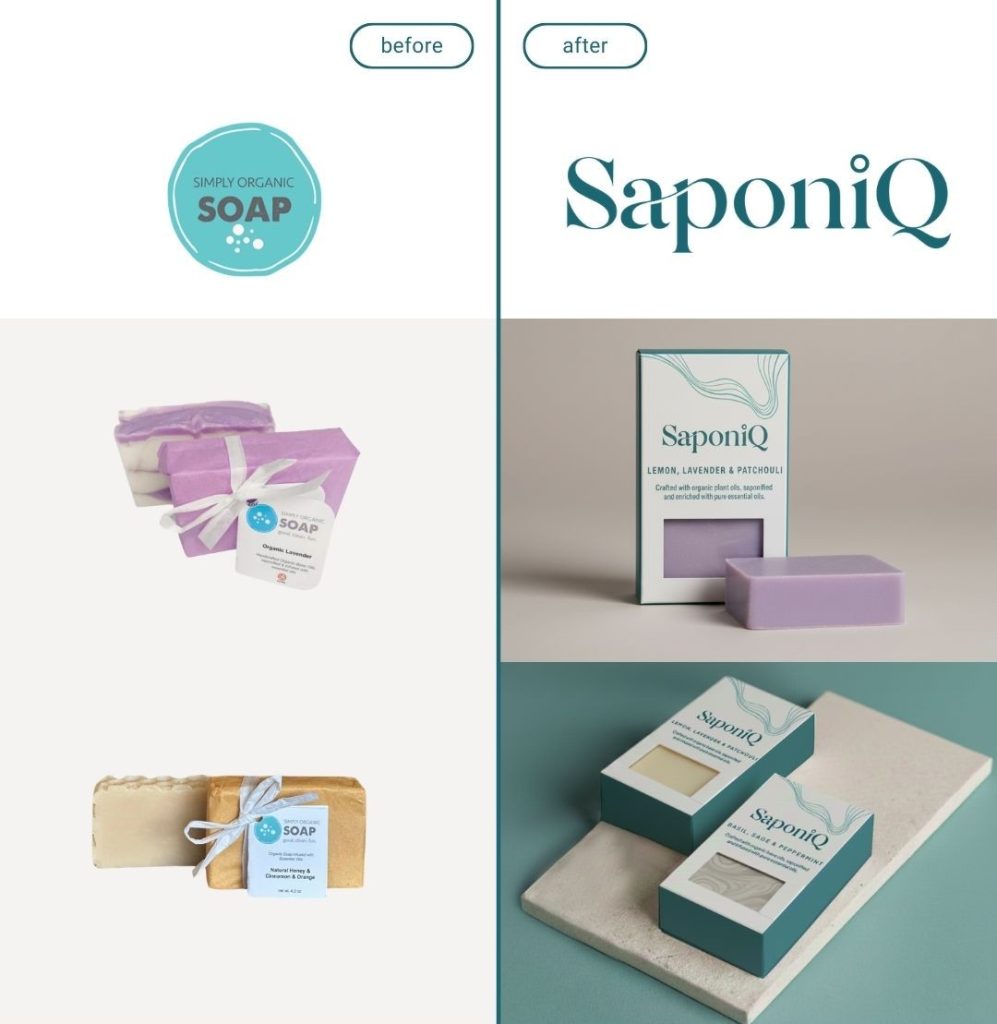
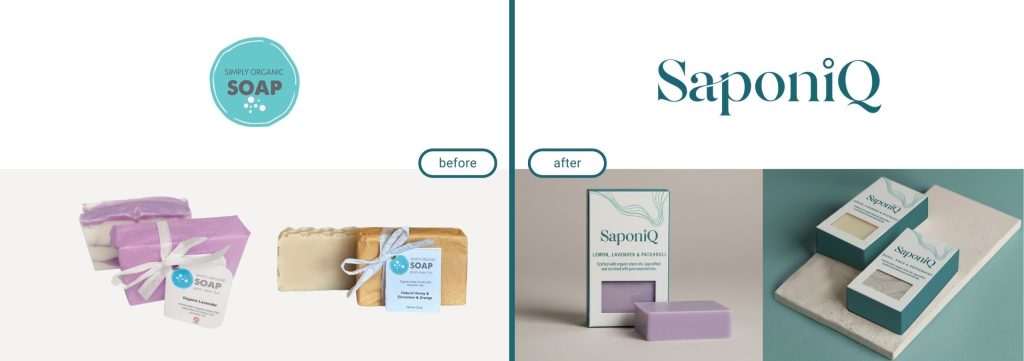
For example, we did exactly that with the SapoinIQ Skincare and Body Care project, building the brand to support the founder’s strategic direction from day one.
How long should I wait before rebranding?
Most skincare brands should not rebrand before year three. The first rebrand usually happens between years three and five, after the founder has enough customer data, retail experience, and product-line clarity to know what the next version of the brand needs to be.
Rebranding too early is a real risk. The first 18 months of a skincare brand are about learning who the customer actually is, which products work, what the price point can sustain, and where the brand is going. Rebranding before that learning is in is a guess.
Rebranding too late is a bigger risk. Brands that delay past year five often end up rebranding under pressure — losing a retail deal, watching conversion drop for two years, or scrambling to keep up with newer competitors. The work is harder and more urgent than it had to be.
The window most skincare brands rebrand in is years three to five, when the business has learned enough to know what it needs and not yet so far behind that the rebrand becomes a rescue.
What is the next step?
If two or three of the signs above are true for your skincare brand, the rebrand is real. The work is not whether to do it. The work is when, with whom, and how.
This is what we do at Aventive Studio. Skincare-only rebrands for founders who have outgrown the brand they built and are ready for the one that matches what the business has become. See how we work.