
The Real Reason Your Skincare Brand Isn’t Converting

You’re getting traffic. Maybe from ads, maybe from an influencer post that did numbers, maybe from organic search you’ve worked hard for. People are landing on your product page and leaving without buying. Your first instinct is to blame the ad creative or the price. Usually, it’s neither. Usually, the site itself isn’t giving a stranger enough reason to trust a product she’s never touched, smelled, or seen in person.
Why more traffic won’t fix a conversion problem
More traffic amplifies an existing conversion problem instead of solving it, because if your site isn’t converting 1 in 100 visitors, it won’t convert 1 in 1,000 either. Founders often respond to flat sales by spending more on ads, which is the equivalent of pouring more water into a bucket with a hole in it.
Skincare is a trust purchase. Nobody buys a $60 serum from a brand they’ve never heard of because the ad was clever. They buy because something on that page answered the doubts already running through their head: does this actually work, is this safe for my skin, is this company legitimate, will this feel like a luxury purchase or a regret. If your product page doesn’t answer those questions in the first screen, you lose people before they scroll.
Traffic problems and conversion problems require completely different fixes. One is a media buying issue. The other is a design and messaging issue on the page itself. Most skincare founders are solving the wrong one.
What’s actually killing trust on your product page
The biggest trust killers on skincare product pages are stock-photo-feeling imagery, vague ingredient claims, no visible proof of results, and pricing that isn’t justified anywhere on the page. Walk through your own product page as a stranger and count how many times you actually explain why this costs what it costs.
Ingredient lists without context don’t build trust, they just look like every other brand’s ingredient list. “Formulated with hyaluronic acid and niacinamide” means nothing anymore, every brand says it. What builds trust is specificity: percentage concentrations, the actual mechanism, why you chose this delivery system over a cheaper one, what problem this solves that a $12 drugstore version doesn’t.
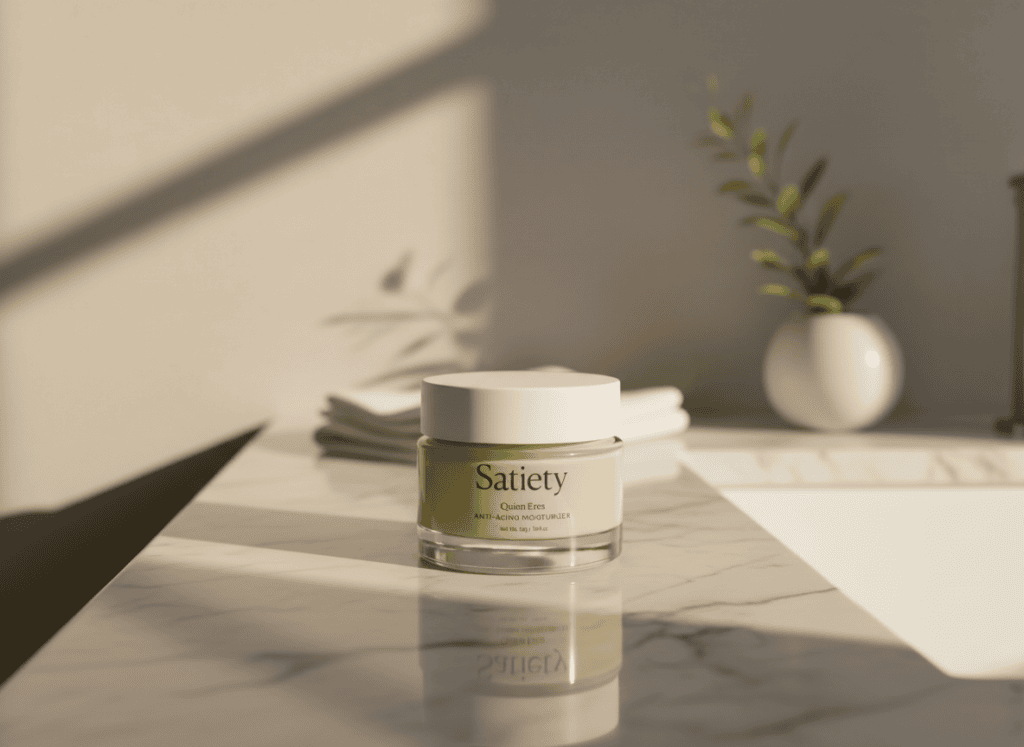
Photography matters more than founders want to admit. If your product shots look like they were taken for a class project, that visual signal tells a shopper this is a small, unproven brand, regardless of how good the formula actually is. People transfer the quality of your photography onto the quality of your product before they’ve ever opened the bottle.
And price without justification just creates hesitation. If you’re charging $58 for a serum, the page needs to earn that number through formulation detail, packaging quality, and brand positioning, or the customer’s brain defaults to comparing you against the $18 version at Target.
The layout mistakes that quietly kill sales
Skincare product pages convert worse when the “why” comes after the “buy,” when reviews aren’t visible above the fold, and when routine or usage instructions are buried instead of shown clearly. Structure is not decoration. It’s sequencing trust in the right order.
The strongest skincare product pages we’ve built follow a pattern: hero claim and product shot first, immediate proof second (reviews, before-and-afters, press), then ingredient story, then usage and routine context, then FAQ objections, then a final CTA that reinforces the offer. Founders often reverse this. They lead with brand story, which nobody cares about yet because they haven’t decided if the product works.
Reviews specifically need to be visible early, not buried at the bottom of the page. A shopper scrolling for eight seconds needs social proof before she’ll read a single ingredient claim. If your five-star reviews are three scrolls down, you’re losing people who would have converted if they’d seen them sooner.

How branding problems disguise themselves as tech problems
Founders often blame Shopify apps, page speed, or checkout flow when the actual issue is that the brand itself hasn’t earned enough trust or desire to convert a cold visitor regardless of how the technical experience is set up. You can have a fast, beautifully coded Shopify store built on a weak brand foundation, and it will still underperform.
This is where founders spend money in the wrong place. They hire a Shopify developer to fix conversion when what’s actually broken is the positioning behind the product. A developer can build you a flawless checkout experience. They cannot make your value proposition clearer or your packaging feel more premium. That’s a brand and design problem wearing a tech costume.
Before you invest in another app or another round of speed optimization, audit whether your site actually communicates who this is for, why it’s priced the way it is, and why it should be trusted. Fix that first. The technical layer only matters once the brand layer is doing its job.
Conclusion
Low conversion rates feel like a marketing problem because that’s the layer founders interact with daily. But the site itself is often the actual leak. If strangers land on your page and leave, the fix usually isn’t a better ad or a faster checkout. It’s a product page that finally answers the trust questions a $60 skincare purchase demands, backed by a brand strong enough to make that price feel obvious instead of risky.
If your traffic looks fine but your sales don’t reflect it, the problem is likely upstream of your ad account. See how we build full skincare brand and website systems at aventivestudio.com/services