What’s Actually Included in a Skincare Branding Project
Most founders evaluating a skincare branding agency have no idea what they are actually buying.
They see a price quote. They see a list of deliverables. They have nothing to compare it to. So they pick the agency that feels safest, or cheapest, or has the slickest portfolio. None of those signals tell them whether the skincare branding work will actually move their business.
This is what a real skincare branding project includes. Not the marketing version. The actual deliverables, the order they happen in, and what separates serious work from cheap work.
What is the first phase of a skincare branding project?
The first phase of a skincare branding project is strategy. Strategy defines who the brand is for, what it believes, how it positions in the market, and what it sounds like, before any visual design work begins. A serious skincare branding agency will not start the visual work without strategy.
Strategy means answering the questions that every later decision depends on. Who is this skincare brand for, specifically. Not skincare buyers. Not women twenty-five to forty-five. The actual customer, with a name, a daily life, a reason to buy, and a list of brands they currently choose between. What does this brand believe about skincare that competitors do not. What is the position in the market. What is the voice. What is the promise.
Founders try to skip this. They want to see the logo. The logo is the easy part. The logo is the output of strategy. If the strategy is wrong, the logo will be wrong, and no amount of redesign will fix it.
A serious skincare branding agency will not start the visual work without strategy. A cheap one will. That is the first signal.
What does a skincare brand identity include?
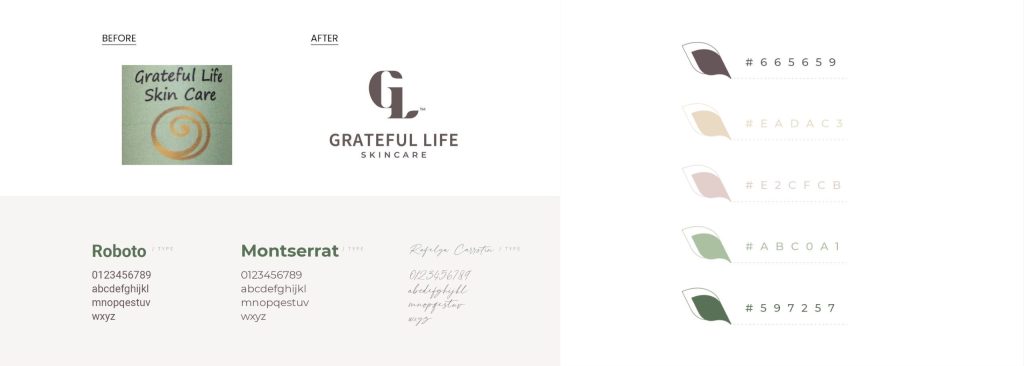
A skincare brand identity includes the logo system, color palette, typography system, visual language, and brand guidelines. These five elements together form the visual foundation that travels across every touchpoint of the skincare brand.
The logo system. Not just one logo. A primary mark, a secondary mark, a monogram, a horizontal lockup, a vertical lockup, a stamp version. Each one is used in a specific context. A logo that only exists in one form will fail the moment you need it on a small product cap or a wide website header.
The color palette. Two or three primary colors that own the skincare brand. A secondary palette that supports them. Specific hex, RGB, CMYK, and Pantone values for every color, for digital and print. Color that is approved for packaging printing, not just screen display.
The typography system. A primary typeface, a secondary typeface, and rules for when to use each. Sizes, weights, line heights, letter spacing. Fonts that are licensed correctly so you can use them across the website, the packaging, and every printed asset without legal risk.
The visual language. Photography direction, illustration style, texture, pattern, iconography. The stuff that makes the skincare brand feel like itself before anyone reads the logo.
Brand guidelines. A document that captures every rule so the next designer, copywriter, photographer, or contractor knows how to use the brand without breaking it.
Does skincare branding include packaging design?
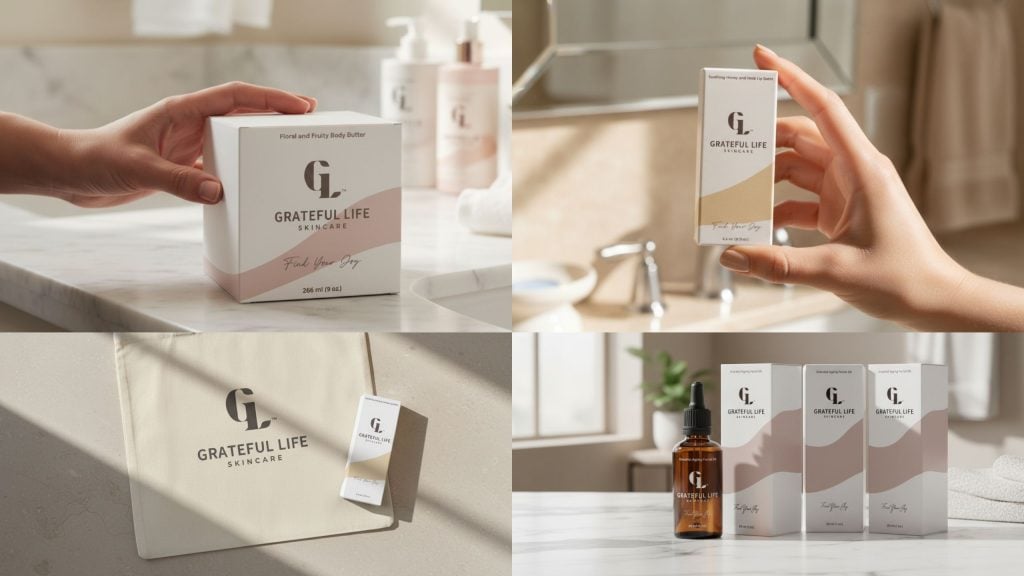
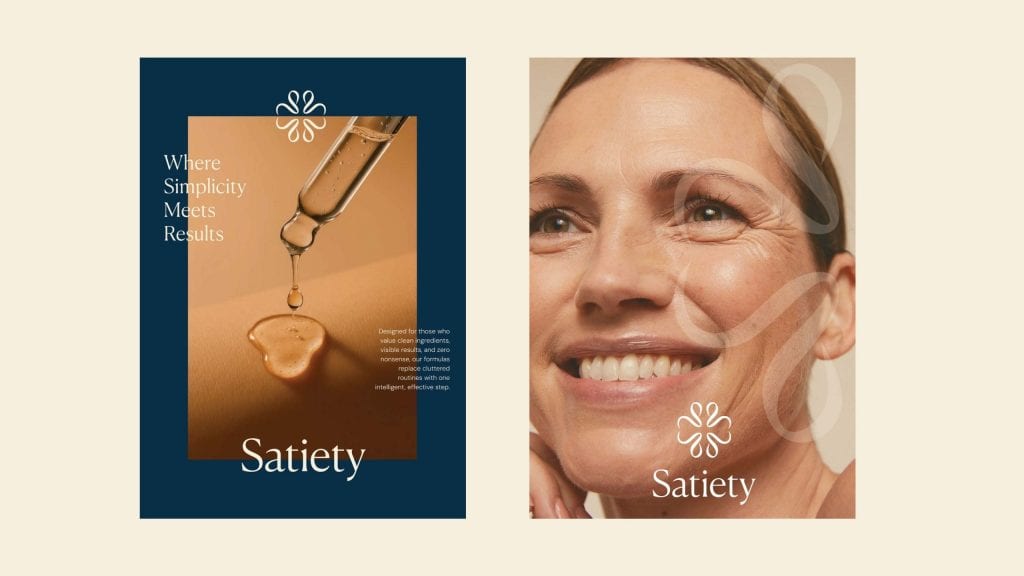
Yes, real skincare branding includes packaging design. Skincare lives or dies on packaging because every bottle, carton, and label is a touchpoint that gets photographed and shared. Skincare packaging design is component selection, structural design, label artwork, dieline preparation, and printer-ready files.
Skincare lives or dies on packaging. The bottle, the carton, the label, the seal, the insert. Each one is a touchpoint. Each one is photographed. Each one ends up in unboxing videos and Instagram flat lays and shelf displays. If the packaging is weak, the brand is weak.
Real skincare packaging design is not a label slapped on a stock bottle. It is component selection, structural design, label artwork, dieline preparation, regulatory compliance for skincare ingredient lists, and printer-ready files in the formats your manufacturer needs.
It is also strategy. Why this bottle and not the cheaper version. Why this color of glass. Why this material on the secondary packaging. Every decision either supports the price point or undermines it.
If the agency you are talking to does not understand bottle shapes, label adhesives, FDA requirements for cosmetic claims, or how to prepare files for a Korean filler versus a domestic one, they should not be designing your skincare packaging.
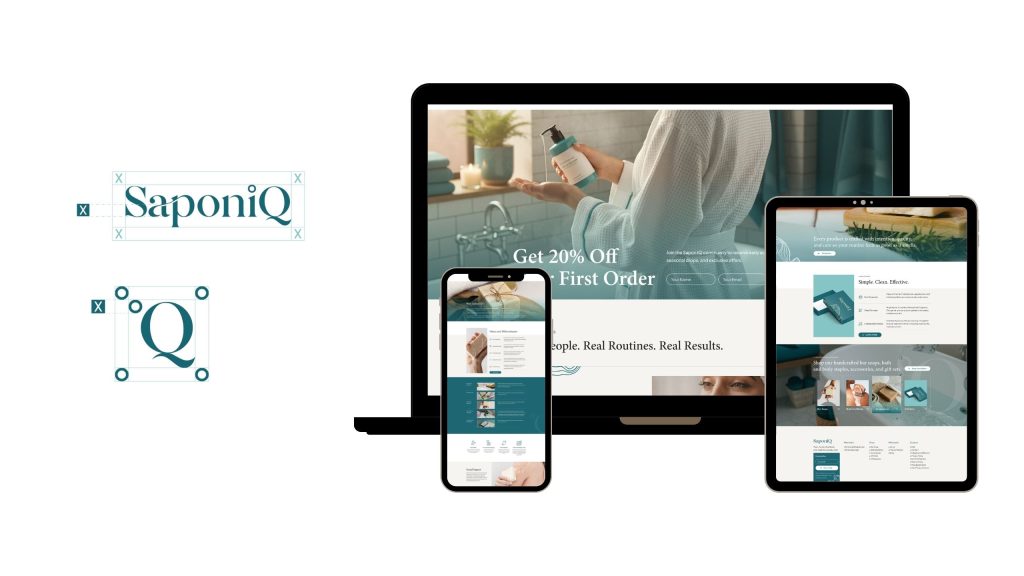
What about the website?
A skincare brand website needs more than a Shopify theme with the colors swapped. It needs a homepage that communicates positioning in three seconds, product pages that handle skincare-specific objections, real conversion copy, and technical setup that passes Core Web Vitals on mobile.
The skincare brand website is where the brand becomes a business. It is where the customer either buys or leaves.
It needs a homepage that communicates positioning in the first three seconds. Product pages that handle the specific objections skincare customers have, which are different from every other category. An About page that builds founder credibility without making it about the founder. A press section. A reviews integration. A subscription flow if the business model requires it.
It also needs copy. Real copy. Not placeholder copy a designer wrote in five minutes. Copy that converts, written for the specific customer the strategy identified.
And it needs to load fast, work on mobile, pass Core Web Vitals, and be set up so the founder can update it without breaking it. The technical side is invisible until it fails. Then it is the only thing that matters.
How long does a skincare branding project take?
A real skincare branding project takes between 8 and 16 weeks. Strategy is 2 to 3 weeks, brand identity is 3 to 4 weeks, packaging is 3 to 6 weeks, and website is 4 to 8 weeks running in parallel with the back half of the brand work.
Anyone telling you they can deliver a full skincare brand identity, packaging system, and website in three weeks is not actually doing the work. They are running a template through a different colorway. The deliverables look like a brand. They do not function like one.
What does a skincare branding project actually cost?
A serious skincare branding project starts at around $25,000 and goes up from there based on scope. Below that price point, the work is either templated, junior, or pulled from someone working alone without the bandwidth to deliver every piece at the level skincare requires.
Below that, the work is either templated, junior, or pulled from someone working alone without the bandwidth to deliver every piece at the level skincare requires. There is a place for that work. It is not the right tool for a brand built to compete in a serious retail or DTC category.
Above $25K, you are paying for senior strategy, dedicated design, packaging expertise, website development, and a team that can hold the brand consistent across every touchpoint. You are paying for the decisions, not the files.
What is the next step?
If you are evaluating a skincare branding agency right now, ask three questions. What is the first phase of the project. How is packaging handled. What does the website actually include. The answers will separate the real agencies from the rest of the field.
This is how we work at Aventive Studio. Brand strategy, identity, packaging, and websites for skincare founders building serious brands.