
How to Keep a Skincare Brand Consistent Across Packaging, Website, and Social
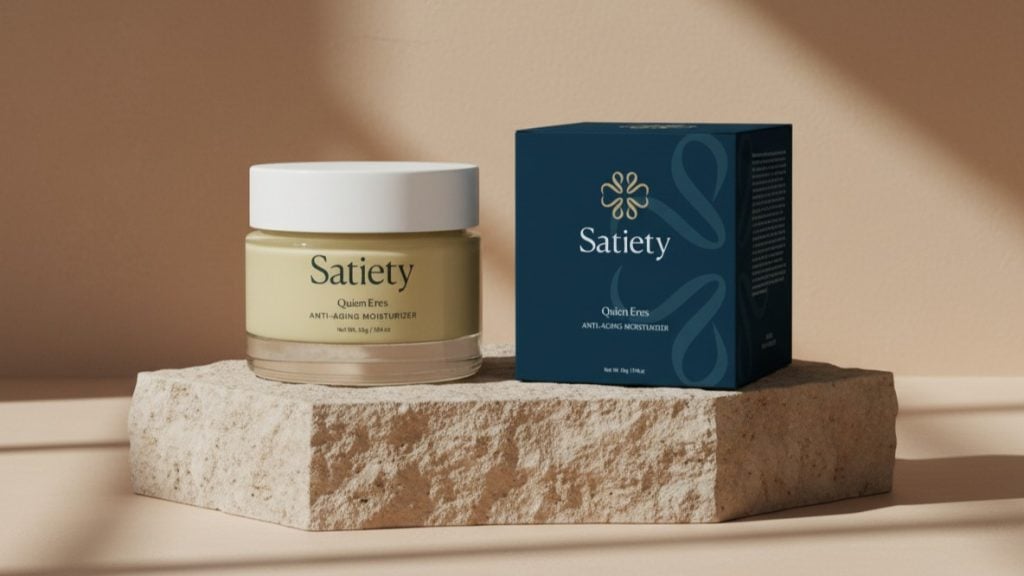
Skincare brand consistency is one of those things customers cannot articulate but can feel instantly. The bottle on the shelf, the website hero, the Instagram grid, the email header. When they all feel like the same brand, the customer trusts. When they do not, the customer cannot say why something is off, but the trust is gone.
Most skincare founders treat consistency like a discipline problem. Be more careful. Use the right colors. Stick to the brand guidelines. That framing makes consistency feel like willpower, which is exactly why it fails.
Consistency is not effort. It is a system. Here is how to build one and how to keep the brand intact across every touchpoint.
Why is brand consistency important for skincare brands?
Brand consistency is important for skincare brands because every touchpoint is a trust signal. A skincare brand that feels different on packaging, the website, and Instagram tells the customer no one is in charge. That signal travels – if no one is in charge of the brand, the customer questions who is in charge of the formula, the quality, and the experience.
Consistency builds recognition. Recognition builds trust. Trust drives the purchase decision. The path is that direct.
In a category as crowded as skincare, the customer sees hundreds of brands a month. The ones that stay in their memory are the ones that look like themselves everywhere. The ones that fade are the ones that look slightly different at every touchpoint.
Inconsistency does not just cost recognition. It costs the price point. A brand that feels premium on the website and average on the packaging gets read as the average. The weakest touchpoint sets the ceiling for what the customer is willing to pay.
What makes a skincare brand inconsistent?
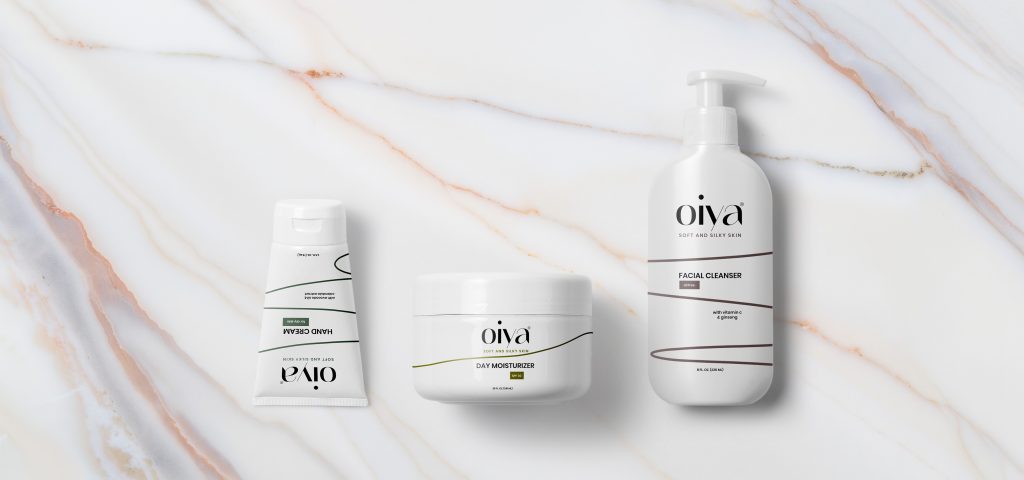
Skincare brands become inconsistent when there is no system holding the brand together. The most common causes are missing or incomplete brand guidelines, multiple people designing without coordination, the founder making one-off decisions in the moment, and assets accumulating over time without being audited.
Missing brand guidelines is the most common cause. The original designer delivered logo files and called it done. Six months later, the founder is choosing colors for an Instagram post, the email designer is picking fonts the original brand never used, and the packaging printer is running pantones that do not match the website.
Multiple people designing without coordination is the second cause. The web designer is one person. The packaging designer is another. The social media manager is a third. None of them are looking at the same source of truth, so each interprets the brand slightly differently.
Founder one-off decisions are the third. The brand colors are mostly used, but the founder approved a campaign last quarter that used a slightly different shade. That shade now exists in the brand. Multiply that decision by 18 months of small choices and the brand has drifted significantly without anyone noticing.
How do brand guidelines keep a skincare brand consistent?
Brand guidelines keep a skincare brand consistent by giving every person who touches the brand a single source of truth. Real guidelines specify exact colors, typography rules, logo usage, photography direction, voice and tone, and the rules for what to do in situations the original brand did not anticipate.
Guidelines are not a mood board. Guidelines are a manual. They tell a designer who has never worked on the brand exactly which color to use, in which file format, at which size, and in which context. They tell a copywriter what the brand sounds like and what it never says. They tell a photographer how to light the product.
Real skincare brand guidelines include hex, RGB, CMYK, and Pantone values for every color. Specific font names, weights, and licensing information. Logo files in every format the brand will need, with rules about clear space and minimum sizes. Photography direction with example shots. Voice and tone with example sentences. The rules for situations the brand has not yet encountered, because those situations will come.
If the guidelines do not exist or are incomplete, every new asset is a guess. Guesses drift. Drift becomes inconsistency. Inconsistency erodes trust.
What is the easiest place for a skincare brand to lose consistency?
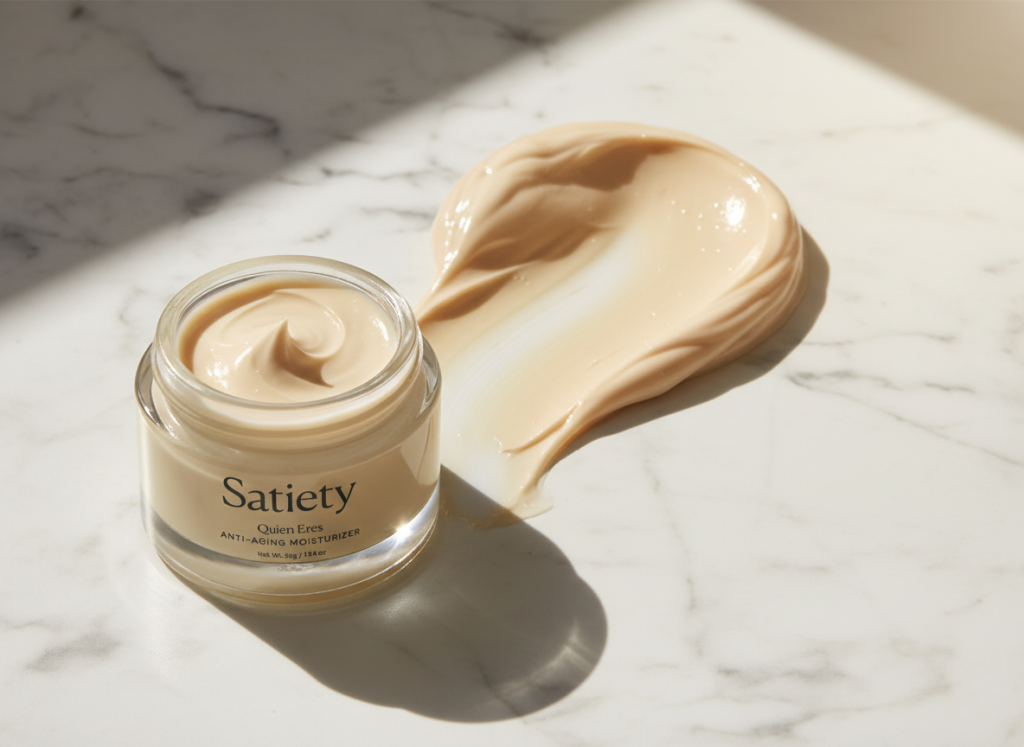
The easiest place for a skincare brand to lose consistency is between packaging and digital. The printed colors on the packaging never exactly match the screen colors on the website. Without a system that addresses this gap directly, the brand starts feeling slightly off at the seam between physical and digital.
Print and screen are different color systems. CMYK for print, RGB and hex for digital. A color that looks right on the website almost never matches the printed version perfectly. Brands that do not plan for this gap end up with a website that looks one shade and packaging that looks another.
The fix is in the guidelines. Every brand color needs to be defined in both systems with the actual color matched at the printer’s pantone book, not just a digital approximation. The brand is then designed around what works in both, not what looks best in one.
This is the kind of gap that does not show up until the printed packaging arrives next to the laptop displaying the website. By then, the inconsistency is locked in. The right time to solve it is at the brand identity stage, not after.
How does a skincare brand stay consistent on social media?
A skincare brand stays consistent on social media by treating each platform as an extension of the brand system, not a separate creative space. The grid, the photography, the typography, the voice, the post templates all need to come from the same brand guidelines as the packaging and the website.
Social media is where most skincare brands lose consistency fastest. The pace of posting is high. The content is being made by someone other than the original designer. The platforms reward novelty, which pulls the brand toward experimentation.
The brands that hold up build a social system early. Templates for the most common post types. Approved photography styles. A tight palette of fonts. Voice rules for captions. Once those exist, social posting becomes faster and more consistent at the same time, because the team is not making new decisions every day. They are executing a system.
This is why the strongest skincare brands look like themselves on Instagram in a way that smaller brands rarely match. It is not that they are more creative. They built a system that lets them post at speed without drifting.
What is the next step?
If your skincare brand feels slightly different at each touchpoint, the issue is not effort. The issue is the system. Real brand guidelines, defined once, fix most of the drift before it starts.
This is what we do at Aventive Studio. Skincare brand systems built to hold up across packaging, website, social, and every touchpoint that comes after launch. See how we work.