
Positioning Problem or Design Problem? How to Tell
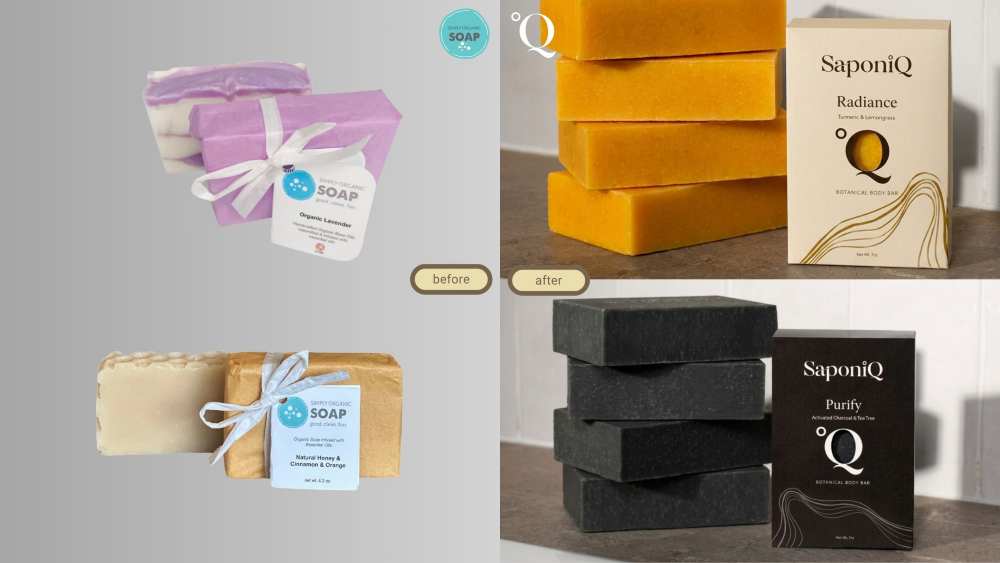
“Our branding isn’t working” is one of the most common things skincare founders say to us, and it’s almost never specific enough to be useful. Branding isn’t one thing. It’s a strategic layer and a visual layer, and they fail differently, get diagnosed differently, and get fixed differently. Founders who can’t tell the difference end up hiring designers to solve strategy problems, which is like repainting a house with a cracked foundation.
What a positioning problem actually looks like
A positioning problem shows up as confusion about who your product is for, why it’s priced the way it is, or why someone should choose you over an obvious competitor, and no amount of visual polish fixes that confusion. If you asked ten customers who this product is for and got ten different answers, that’s positioning, not design.
Positioning problems sound like this internally: “We sell to everyone who cares about clean skincare.” “We’re kind of like [bigger brand] but more affordable.” “I’m not sure why people would pick us over the brand next to us on Credo’s shelf.” These are strategic gaps. Your logo could be redesigned by the best studio in the country and none of these problems go away, because the issue isn’t how the brand looks, it’s what the brand actually stands for.
You can usually spot a positioning problem in the numbers too. If your traffic converts inconsistently across channels, if your retail buyers keep asking “so who is this for again,” if your reviews mention loving the product but customers can’t articulate why they bought it over alternatives, that’s a clarity issue at the strategic level, not a visual one.

What a design problem actually looks like
A design problem shows up when your positioning is clear but the visual execution, packaging, typography, color, photography, doesn’t communicate that position accurately to a shopper making a fast decision. This is the founder who knows exactly who they’re for and why, but their packaging looks like a 2015 drugstore brand or a generic “clean beauty” template that gets confused with fifteen competitors.
Design problems sound different: “We know our customer, we know our price point, but our packaging looks cheaper than it should for what we charge.” “People keep comparing us to a brand we don’t actually compete with because we look similar to them.” “Our website doesn’t feel as premium as our formula actually is.” These are execution gaps. The strategy is sound. The translation into visual language is what’s broken.
This is a fixable, contained problem, and it’s usually the less expensive one to solve because you’re not rebuilding the foundation, you’re rebuilding the expression of a foundation that already works.
How to diagnose which one you actually have
Test your positioning by writing one sentence describing your ideal customer, their specific problem, and why you solve it better than the nearest competitor, then ask five people outside your company to repeat it back in their own words. If they can’t, you have a positioning problem, regardless of how your packaging looks.
A second diagnostic: pull up your product next to your three closest competitors on a shelf or a screen. If someone unfamiliar with all four brands can’t tell you which one costs more, which one is more clinical, which one is more indulgent, that’s a design execution problem, because your visual language isn’t differentiating you.
A third diagnostic, and often the most revealing: look at your returning customer language in reviews and support emails. If customers describe your brand in ways that don’t match how you’d describe it internally, that’s a positioning gap, a disconnect between what you intend to communicate and what’s actually landing.
Most brands we audit have some of both, but usually one is significantly larger than the other, and that’s the one to fix first.

Why fixing the wrong one wastes real money
Redesigning packaging without fixing positioning gets you a more beautiful version of a confused brand, and rewriting positioning without updating design leaves you with a clear strategy trapped inside visuals that contradict it. Both mistakes are expensive, but the first one is more common and more costly, because packaging production runs, photography, and web design aren’t cheap to redo twice.
We’ve audited brands that spent over $30K on a packaging redesign that looked significantly more premium, and their conversion and retail acceptance barely moved, because retail buyers and customers were still confused about who the brand was for. The new design was objectively nicer. It just didn’t solve the actual problem, so the money didn’t produce the return the founder expected.
The inverse happens too, though less often. A founder gets crystal clear on positioning through internal work or a consultant, but never translates it into the actual customer-facing visuals, so the clarity lives in a Google Doc nobody outside the company ever sees.
Conclusion
Before you hire anyone, spend a week diagnosing which layer is actually broken. Positioning problems require strategic work: customer definition, competitive differentiation, pricing logic. Design problems require visual translation: packaging, typography, photography, web design. Most founders assume they need the second when they actually need the first, and that assumption is why so many rebrands underperform.
If you’re not sure which problem you have, that diagnosis is exactly where we start with every founder we work with. See our approach to brand strategy and design at aventivestudio.com/services/